
Making Big Design More Big Design
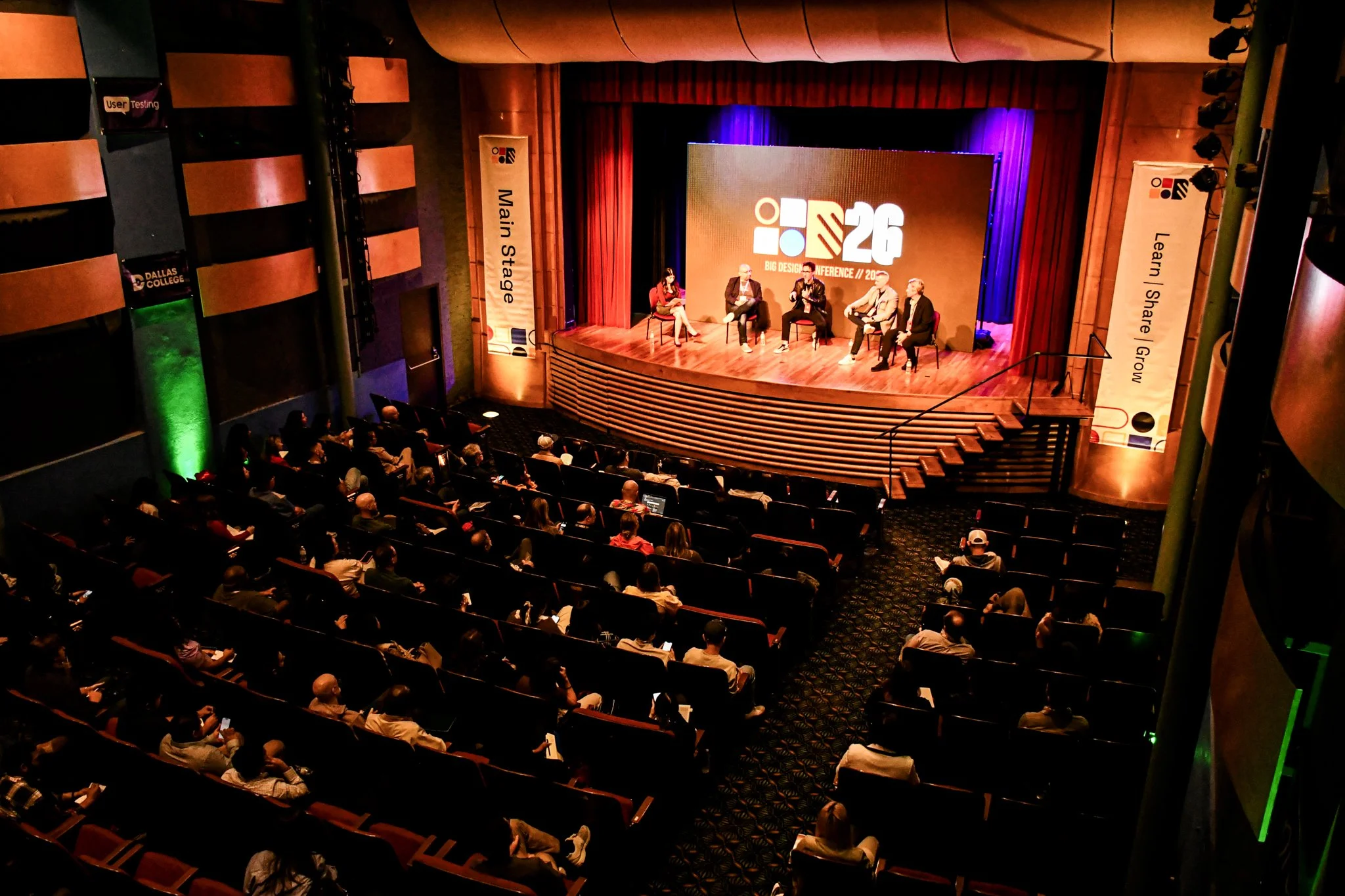
If you’ve been around Big Design for a while, you’ve probably noticed that things look a little different. We have a new identity, a new website, and new social handles. We’re also starting to release talks from Big Design 2026, publish more articles and resources, and put more energy into what happens between conferences.
All of that came out of a much larger conversation about what Big Design should be going forward. Somewhere along the way, though, we realized we were asking the wrong question. Instead of asking what Big Design should become, we needed to spend more time understanding what people already valued about it.
In other words, what makes Big Design, Big Design?
It has always been about the people.
The conference is obviously a big part of Big Design. It brings hundreds of people together, gives us a chance to hear from people doing interesting work, and creates a few days every year where a lot of the design community is in the same place at the same time.
But some of the best parts have never been limited to what happens on stage.
They happen when you meet someone between sessions and end up talking for 30 minutes. They happen when a speaker says something that changes the way you think about a problem at work. They happen when you run into someone you met the year before, introduce a friend to a former coworker, volunteer, show up to a meetup, or finally meet someone you’ve only known online.
Those experiences are harder to put on an event schedule, but they are a huge part of why Big Design has lasted.
When we started working on the brand, we kept coming back to that. The thing we wanted to preserve wasn’t a particular version of the conference or a particular visual identity. It was the exchange that happens when people who care about this work spend time together.
That eventually gave us a pretty simple way of describing Big Design:
Connect. Learn. Grow.
Community is the foundation. Learning is the exchange. Growth is the outcome.
Those ideas aren't a new direction for Big Design. If anything, they're our attempt to put better language around what we've seen happening here for years.
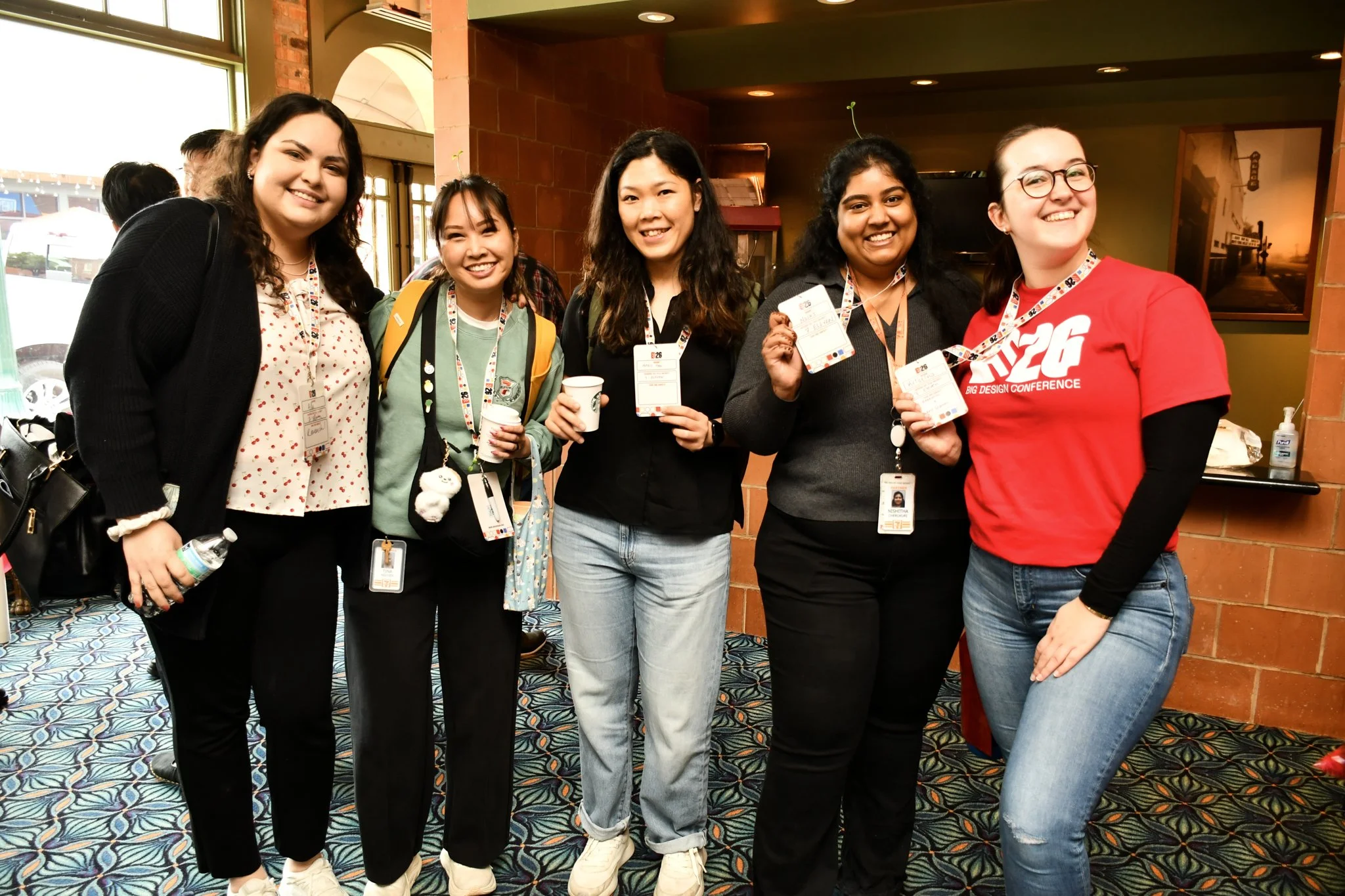
Making Big Design more Big Design
That led to another phrase we started using internally: make Big Design more Big Design.
It sounds a little ridiculous, but it became a useful way to check ourselves.
We could spend a lot of time thinking about how to make Big Design bigger, how to make it look more like other conferences, or how to add more things to it. None of those questions necessarily get us closer to what people value about this community.
Instead, we started asking what would happen if we created more opportunities for the things that already work.
How could someone who couldn't attend the conference still learn from the people who spoke there? How could we keep a good conversation going instead of losing it when everyone went home? How could someone who discovers Big Design in October find a way into the community, without waiting for the next conference? How could our monthly meetups, articles, videos, resources, and conference feel like parts of the same Big Design rather than a collection of separate things?
Those questions started shaping what we're building now.
The conference ends. The conversation shouldn't.
One of the clearest examples is what happens to conference talks.
A lot of work goes into preparing a talk for Big Design, and a lot of good conversations start in those rooms. Historically, most of that value has belonged to the people who happened to be there at that particular time.
We don't think it has to work that way.
We're starting with Big Design 2026 and going back through the conference to release talks on our YouTube channel. Alongside the videos, we'll publish articles and resources that make useful ideas easier to find and revisit. Over time, we also want to experiment with other ways of making those conversations accessible to people who prefer to learn differently.
The goal isn't to create content for the sake of keeping a publishing calendar full. We want to give good ideas more time and more places to travel, and give the community more opportunities to respond to them.
That also means we're deliberately not trying to publish everything at once. A good conversation doesn't become more valuable because we turned it into twelve posts. We'd rather spend time with the things that are worth sharing and figure out what people actually find useful.
Giving all of it a home
The new BigDesign.org is part of the same thinking.
We wanted the site to represent more of Big Design than the next conference. The conference is still a major part of what we do, but now there is more room for the rest of the community too: our monthly meetups, videos, articles, resources, and ways to stay involved throughout the year.
We're approaching the newsletter differently for the same reason. Rather than primarily showing up when we have something to promote, we're moving toward a monthly rhythm where we can share what's happening in the community, what we're watching and learning from, what's coming up at the next meetup, and some thoughts from Brian and others who help make Big Design happen.
We're trying to make it easier to participate in Big Design.
Someone may find us because a coworker sends them a conference talk. Someone else might come to a meetup because the topic happens to be relevant to something they're working on. They might subscribe to the newsletter, meet someone at an event, share something they've learned, or eventually decide to come to the conference.
There doesn't need to be one right way into the community.
That's ultimately what this work has been about. The new identity gives Big Design a clearer expression of who we are. The website gives more of the community a home. The videos, articles, newsletter, and meetups give us more opportunities to share what people here know and keep conversations moving.
There are plenty of things we still want to try, and we're intentionally not trying to solve all of them at once. For now, we're starting with a few things we think can make Big Design better throughout the year, paying attention to what the community finds useful, and building from there.
We didn't set out to turn Big Design into something different. We set out to understand what has made it worth being part of in the first place, and find ways to create more of that.
That's what we mean when we say we want to make Big Design more Big Design.